How Minimalism Pushed Boundaries
Much of Minimalist art has pushed the boundaries of what we would traditionally consider art. The movement arose in stark contrast to the abstract expressionism pioneered by Jackson Pollock and others in the 1940s. The abstract expressionists considered the act of creation itself as the central focus of the artistic endeavor. The art itself simply existed as an artifact of the process, the true art itself being the artist’s interaction with the canvas. Minimalists, by contrast, demanded an objective analysis of their work on its own merits, separating the art from the artist as much as possible. Many of them eschewed the concept of self-expression, the original stripes in Frank Stella’s work being simply formed by the lumber used to stretch and support the canvas. Donald Judd’s 1964 essay Specific Objects was formative in the theory behind this new school, which by and large eventually stepped away from traditional painting to focus on what some called sculpture, or what Judd somewhat broadly called “new three-dimensional work.”
The 1966 work, Equivalent VIII, by Minimalist sculptor Carl Andre, has certainly been divisive. It was purchased for what was initially an “undeclared sum,” which later turned out to be $6000, by the Tate Gallery in 1972. The piece is comprised of 120 grey sand-lime firebricks arranged in a rectangle six-bricks wide, two-bricks high, and 10-bricks deep.
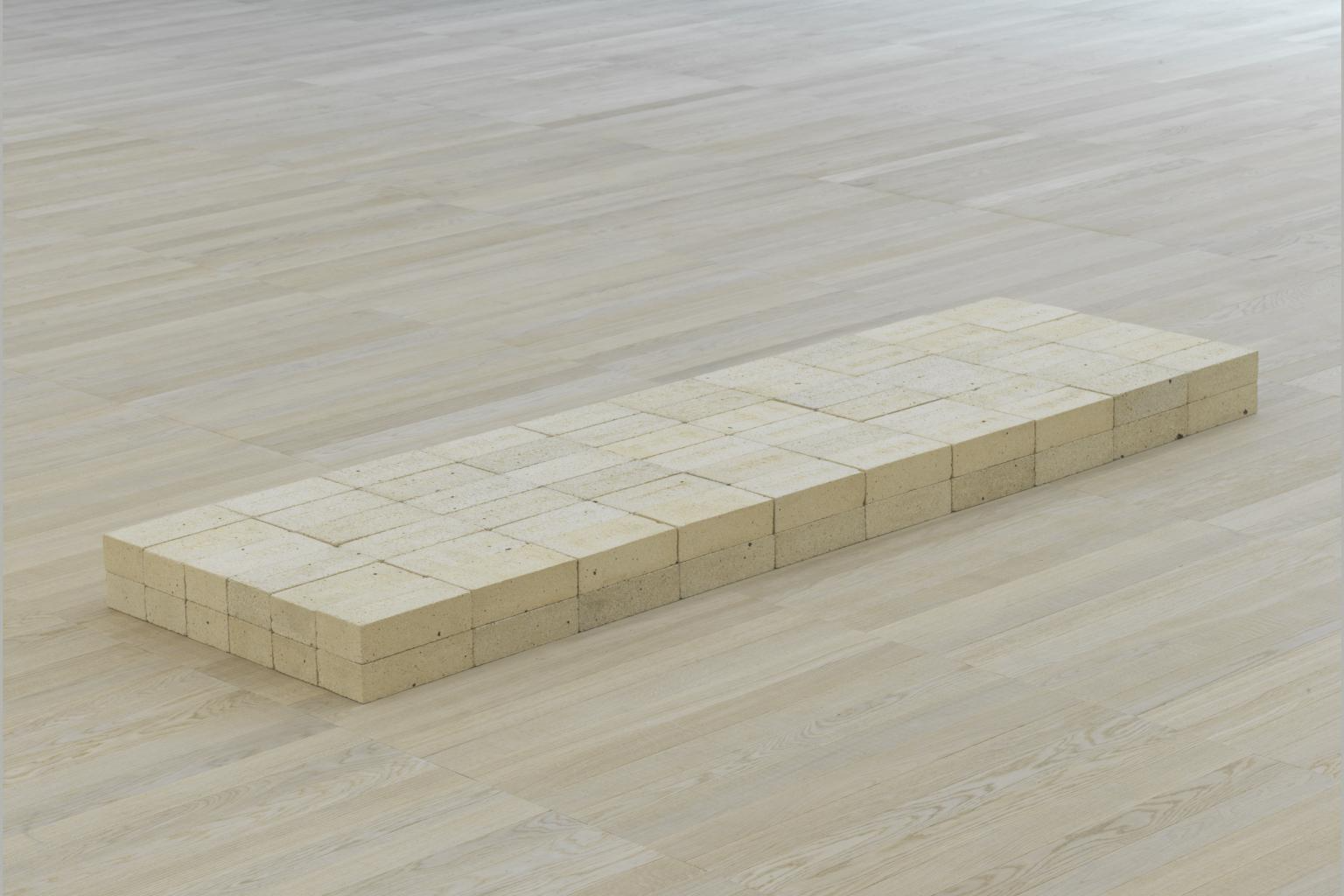
The Bricks, as they became somewhat unaffectionately known, initially didn’t cause much of a stir when they were on display in 1974 and 1975. But when the piece was removed from active collection in February 1976, art critic Douglass Cooper’s crusade to “undermine the cultural authority of the Tate” drew attention to the Bricks specifically in the Tate Gallery’s Biannual Report of Acquisitions. An editorial in Burlington Magazine criticized the use of taxpayer funds to purchase an overpriced pile of bricks. This led to the story being picked up by various newspapers, including the Daily Mirror, eventually prompting Richard Morphet, the Tate Gallery’s Deputy Keeper of the Modern Collection at the time, to publish a 5-page rebuttal in Burlington. In the artical, a surprisingly long one compared to the Burlington’s standard offerings, he defended the relevance of the piece in the public interest, stating, “both the mode of assembly and the scale of [these artists’] works so embody a sense of human proportion, naturalness and limpid clarity as to make these works positive statements of general relevance to society.” Morphett goes on to defend Andre’s work by contextualizing it within the canon of Western art, placing it within the tradition of Constantin Brâncuși’s Endless Columns, and Frank Stella’s black paintings. When I polled my six-year-old daughter for her opinion, the first thing she said was, “It’s not really art,” going on to suggest that Andre might have been more successful in his endeavors if he had painted the bricks.
Equivalent VIII is the eighth and final piece in a collection of works by Andre, each comprised of 120 firebricks organized into different configurations. The eight sculptures are meant to be shown as a group; however, the other pieces were not purchased, thus arguably defeating the entire purpose of the collection. Andre, whose other works include a series of 7 small alnico magnets stuck together, is perhaps considered at the extreme end of the minimalism spectrum. Andre himself presents something of a troubling personal figure, having been notoriously acquitted of second-degree murder charges in the death of his third wife, Ana Mendieta, who supposedly fell out of their 34th-story apartment window, after a fight in 1985.