On Minimalism
I have made this longer than usual, only because I have not had the time to make it shorter. — Blaise Pascal
There is a beautiful concept from the Chinese Hundred Schools of Thought called wu wei (無為). Translated literally, wu wei means “inaction,” “inexertion,” or “effortless action.” The concept was adopted and refined by the early Daoists, such as Laozi and Zhuang Zhou, to mean living effortlessly, going with the natural order of the world. Think of splitting wood along the grain, working with the natural structure rather than against it. Wu wei means living congenially with others and with the natural harmony of the world.
Laozi wrote, “Manifest plainness, embrace simplicity, reduce selfishness, have few desires.” The Daoists advocated for returning to a simpler time when man lived more in communion with nature. While the Daoists arrive at simplicity as a by-product of embracing wu wei, minimalism embraces simplicity as an aesthetic. Minimalism, defined as the purposeful pursuit of less, strips a concept down to its essentials, leaving only the bare necessities. It takes great pains to say so little.
Today, minimalism seems ubiquitous and sometimes even cliche. It surrounds us everywhere, whether it be in corporate logos, in the furniture at our local IKEA, the user interfaces we use every day, or even in the music we listen to. But this was not always the case. “Less is more” has not always been the dominant philosophy. A confluence of influences, climate, and theory led to the eventual explosion of minimalism in multiple disciplines in the 1960s. Whether it was advertising, design, art, architecture, or music, it seemed nothing was to be left untouched by the aesthetics and practices of minimalism.
Precursors to Minimalism
There is an important distinction to be made between what you could call minimalism as an aesthetic writ large, to which we can look back at many examples throughout art history, and Minimalism (also called Minimal Art) specifically as the art movement that arose in New York City in the early 1960s. For the first, we can see elements of minimalism in traditional Japanese garden and interior design, for example.
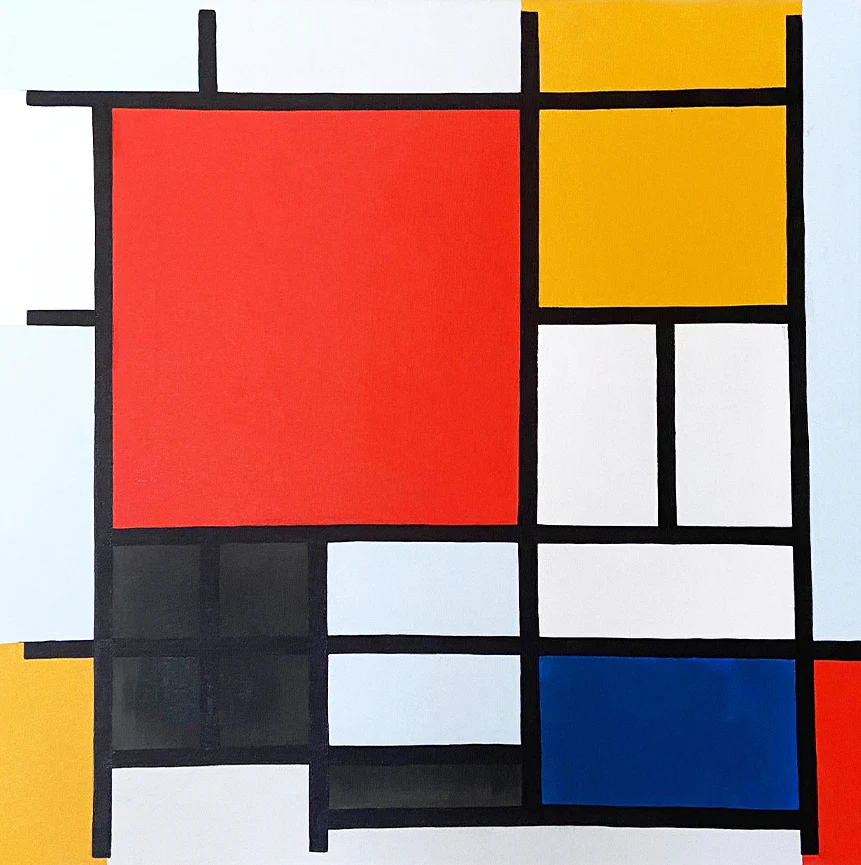
The precursors to Minimalism as an art movement were brewing in the early 20th century. The popular synthetic cubist work by Pablo Picasso from 1912 to 1919 drove many painters to cubism and in the direction of abstraction. Among those inspired by Picasso was Piet Mondrian, who would later go on to paint highly abstract squares of primary colors and black grids as part of his Neoplasticism theory. The heavy focus on art theory of the Neoplasticists was later reflected in much of the work of the Minimalist artists.
Minimalism and De Stijl
Minimalism was influenced by the work of the De Stijl movement, which was co-founded by Piet Mondrian and Theo van Doesburg in 1917 and lasted until 1931. The pair of Dutch painters, who met in Amsterdam at an artists’ colony during World War I, had each arrived at abstraction through their own journeys. De Stijl was the name of the art journal they published, where they espoused their theories. Mondrian, a devoted Theosophist, already had an established career as a realist landscape painter by the time he was 30. He grew increasingly abstract over his career, eventually limiting his palette to the primary colors, plus black and white, and two directions: horizontal and vertical. His theory of art came to be known as Neoplasticism. Mondrian and De Stijl’s influence extended to other fields, including architecture, design, and even fashion.
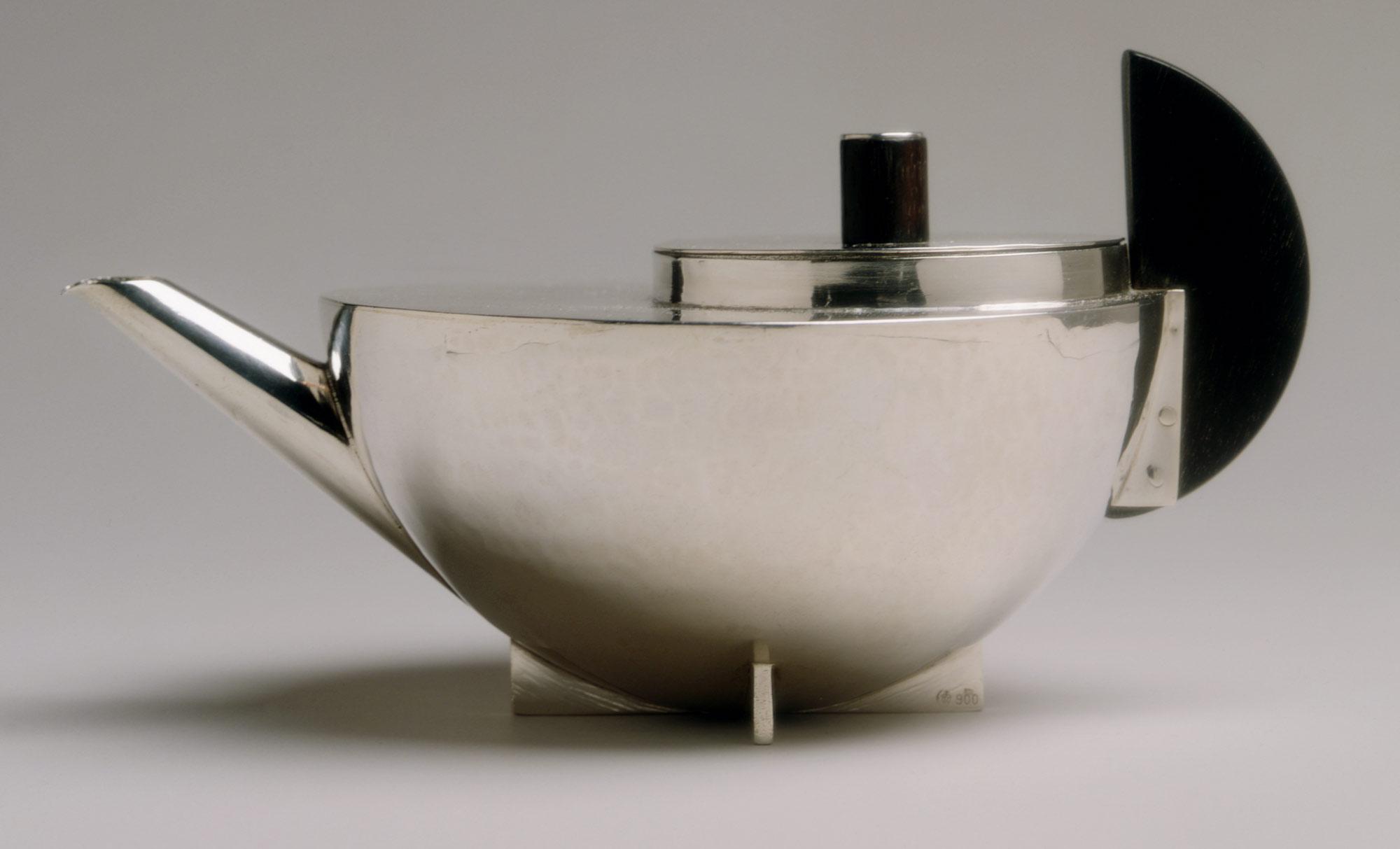
The aesthetics of minimalism were likewise taking form in Germany’s influential Bauhaus art and design school, from which minimalist design often inherits its focus on utility and function. Operating from 1919 to 1933, Bauhaus designers sought to unite individual artistic vision with methods of mass production. Like Mondrian, Bauhaus artists tended toward abstractionism. Bauhaus design was characterized by geometric shapes and functional design elements.
The Minimalist Movement
Minimalism in Visual Art
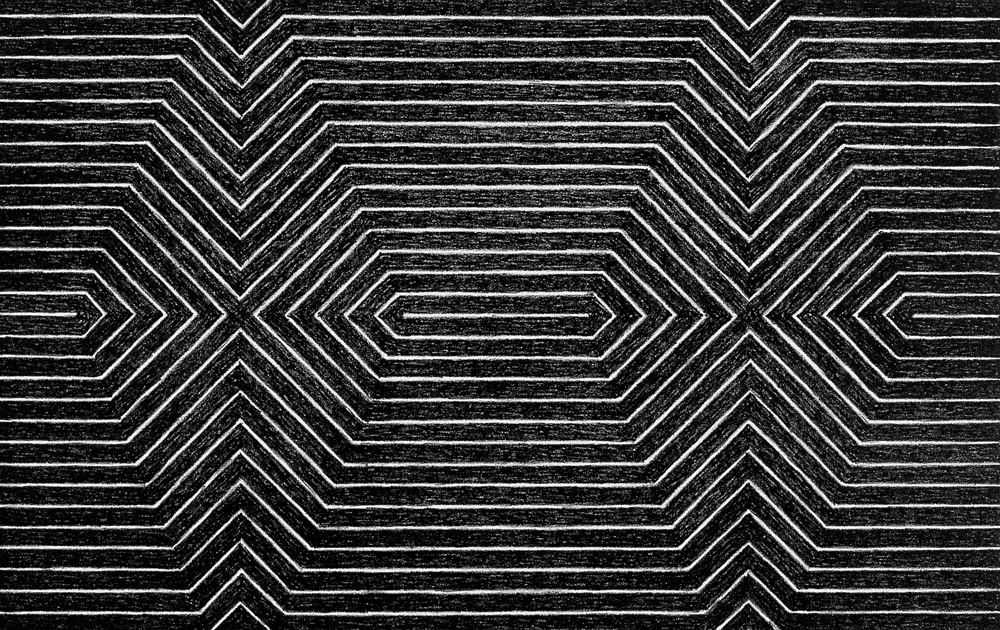
To understand its rise, we need to better understand the climate that the Minimalists were reacting to. Minimalism arose partly in response to the abstract expressionism pioneered by the work of such artists as Jackson Pollock, who sought to remove the restrictions of the canvas from the painter and externalize the inner experience of the artist. By contrast, the Minimalism movement itself was founded on the removal of everything but the object of art itself to be examined, connecting the tangible experience of the audience to the piece through its objective qualities. Rather than focusing on the artist’s experience and self-expression, Minimalists minimized the position of the artist altogether, demanding their work be taken at face value. Although the minimalists tried to remove all context from their work, it is really only understood within the context of its forebears.
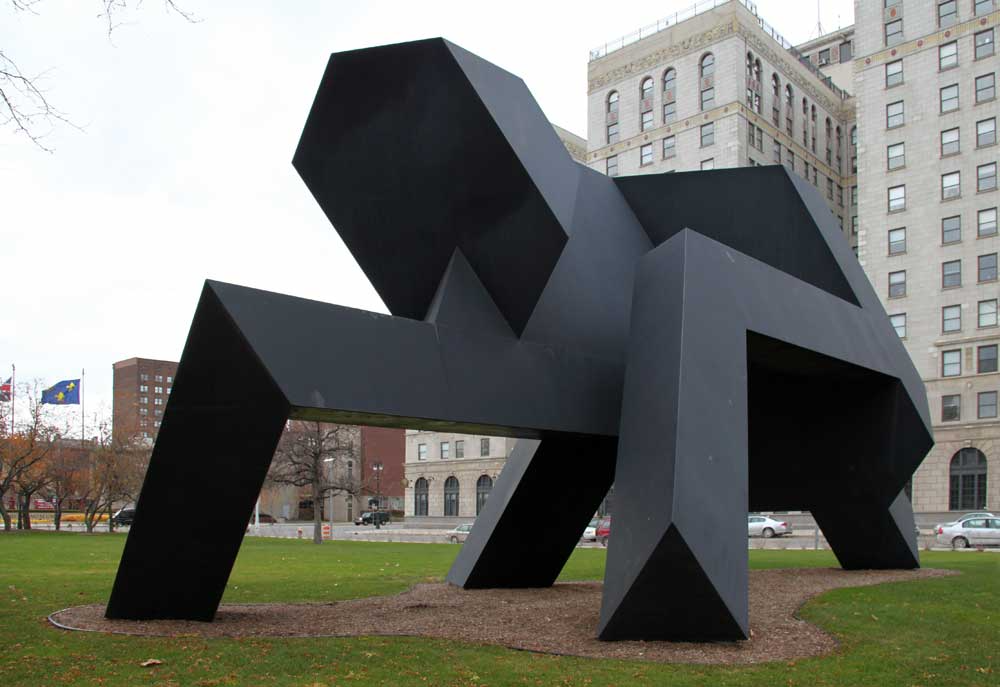
Donald Judd’s 1964 seminal essay Specific Objects was the first to recognize and codify the movement of artists, many of whom abandoned painting and sculpture for what Judd called “new three-dimensional work.” The media and the work of these Minimalists varied considerably, with some artists turning more into industrial fabricators than anything else. Dan Flavin even began using commercially available fluorescent light fixtures for his work, eventually proceeding to vastly sized, site-specific lighting installations in later parts of his career.
Donald Judd’s Specific Objects
Specific Objects by Donald Judd makes the argument that a work of art’s power and identity are directly related to its physical presence in real space. Moreover, he found that simpler forms conveyed a more profound presence in the surrounding space. His argument regarded traditional painting as illusory and disingenuous. His pursuit to strip his work of any subjectivity drew him to industrial fabrication, where he found the precision necessary to ensure the viewer can appreciate his work on its own merit rather than appreciate the craftsmanship behind it. Judd didn’t intend for the essay to be a manifesto, and he readily admitted there were as many differences as similarities between the artists he championed. Interestingly, Judd himself rejected the Minimalist label.
Although the work varied, this new art was marked by several aesthetic and theoretical commonalities: removal of all superfluous elements, minimization of the artist, and a focus on simple shapes, which the minimalists argued were more powerful. One thing was in common with the Minimalists, they were pushing the boundaries of what was considered art.
Minimalism in Design

In 1955, Dieter Rams began working at Braun as a designer, and within 6 years he became the head of design, a position he would retain until his retirement in 1997. Rams was heavily influenced by Functionalist architecture and Germany’s Ulm School of design, which, along with the Bauhaus, was another critical influence on the minimalist designs that began to appear in the early 1960s. Rams designs were marked by a focus on practical aesthetics and clean lines. Rams design was later to be encapsulated in his Ten Principles of Good Design, which has become something of a manifesto for minimalist design. Rams’ influence is monumental, perhaps most notably inspiring Apple designer Jonathan Ive, whose celebrated designs reflect the aesthetic and utilitarianism of Rams’ work.
Dieter Rams’ Ten Principles of Good Design
Dieter Rams wrote his Ten Principles of Good Design in the 1970s as a way to capture his thoughts and philosophy around good design. According to Rams, good design:
Is innovative.
Makes a product useful.
Is aesthetic.
Makes a product understandable.
Is unobtrusive.
Is honest.
Is long-lasting.
Is thorough down to the last detail.
Is environmentally friendly.
Is as little design as possible.
Design especially lends itself to minimalism due to several factors. Namely, utilitarian and minimalist designs are better suited to mass production and lend themselves to aesthetic designs that value function as highly as form. Much like Donald Judd turning to industrial fabrication to create his art pieces, minimalist design lends itself naturally to machine-production.
Minimalist Music
Terry Riley, In C, 1964
Along with the Minimalist movements in art and design, music was likewise having an explosion of minimalism. In 1964 came Terry Riley’s inimitable In C, a classic example of a minimalist piece in music. The piece, added to the National Recording Registry in 2022, is composed of 53 repeating segments of music to be played by any number of musicians in a guided improvisation. It was inspired by Riley’s earier work with tape loops, which he sought to replicate in the piece. Riley actually wrote down the piece, which was rare for him to do, fitting the composition onto a single sheet of minimal notation, observing, “I could play this a hundred different ways, so why should I write it down one way?” The notation and a brief set of instructions accompanied the LP, with Riley encouraging performers to repeat their part while listening to the ensemble to see how their part fits into the larger work.
The beauty of the piece is in its variability—each performance is unique, due to variations in instrumentation and its improvisational elements. Riley, who was previously steeped in the study of Indian classical music, sought to induce satori, the Japanese Buddhist experience of awakening or enlightenment, in the listener. Admittedly, Riley never claimed to be interested in minimalism as a concept, taking more inspiration from psychedelia and the psychedelic movement of the 1960s; however, his work went on to inspire countless others in the minimalist tradition, like Philip Glass, and others.
Minimalism Today
The impact of the minimalist movements in the arts and design is obvious today. The minimalists reshaped how we engage with art and what we expect of design, removing everything superfluous, to the point of even removing the artist and their preconceived notions about their own artwork. Echoes of minimalism are reflected in modern web and user interface (UI) design, which borrows its clean lines, focus on content, and often neutral colors to produce highly usable design elements. Modern interior and industrial design trends today frequently center around minimal aesthetics and design choices.
## Making the Case for Less
As a self-professed minimalist, I’m obsessed with minimalism in every aspect of life, whether it’s from a design and artistic perspective, the elegance of a simple solution to a complex problem, or the shedding of life’s complexities to embrace simplicity. Yet I am in constant war with myself because I am not a minimalist by nature. I maximize everything about my life: I make complex systems and routines to manage every aspect of my life. I overthink and overanalyze. I buy too much and give away too little. My daily routine consists of consulting too many devices with screens.
### The Philosophy of Minimalism
~~Elements of ~~
The benefit of minimalism as a philosophy is in reducing choices to alleviate decision fatigue.